Dangerous Nigerian Foods Silently Destroying Your Health
You eat it every day, sometimes twice. You grew up on it, you crave it at midnight, and you defend it with your full chest whenever anyone dares question it. But what if that beloved plate of food you just finished is quietly doing damage you cannot yet see?
Nigerian food is, without argument, some of the most satisfying cuisine in the world. The rich aroma of a pot of egusi soup hitting the stove. The sound of suya sizzling over open coals. The guilty pleasure of an ice-cold soft drink with a steaming plate of jollof rice. There is something deeply human about the way Nigerians eat, with community, with joy, and with absolutely no apology.
But here is the uncomfortable truth: several of the most popular foods in Nigerian households are linked to rising rates of hypertension, diabetes, obesity, and even cancer. These are not rare diseases anymore. Hypertension has reached near-epidemic levels in Nigerian communities, and diet is one of the biggest factors driving that reality. Diabetes is estimated to affect 6.8% of adult Nigerian women and 7.5% of adult men, numbers that are climbing steadily year after year.
This is not a lecture telling you to never enjoy your food again. It is a conversation, the kind your doctor has been meaning to have with you, delivered without the white coat and the waiting room. What follows is a detailed, research-backed look at the popular Nigerian foods that are most likely harming your health, why they do it, and what you can actually do about it without sacrificing your joy at the dinner table.
Read this with an open mind, share it with your mother, your partner, your best friend who insists suya every Friday night is “part of the culture.” Because it is part of the culture. The question is whether that culture needs a small, loving update.
1. Suya: The Beloved Nigerian Food That May Be Giving You Cancer

There is no Nigerian food more universally loved than suya. It does not matter whether you are Yoruba, Igbo, Hausa, or somewhere in between. The moment that smoky, spicy aroma drifts into your nose, your willpower evaporates. You know this. Everyone knows this.
But here is what most suya lovers do not know: grilling meat at high temperatures produces HCAs (heterocyclic amines) and PAHs (polycyclic aromatic hydrocarbons), compounds that are linked to an increased risk of cancer, especially with frequent consumption. These are not invented scare tactics. These are well-documented carcinogens that form when muscle meat is cooked over open flames.
Research has shown that there is a link between consumption of suya and increased risk of cancer in Nigeria. When beef is cooked over an open fire, the fat undergoes complex chemical reactions that produce carcinogenic toxins known as HCAs. The longer the meat sits over that flame, the more of these compounds accumulate.
Beyond cancer risk, suya tends to be high in salt, spice, and MSG (monosodium glutamate used in yaji), which can raise your blood pressure and strain your kidneys over time.
What you can do instead:
- Eat suya no more than once or twice a month, not weekly.
- Always eat it with fresh slices of onion, tomato, and cabbage. These vegetables contain antioxidants that help neutralize some of the harmful compounds.
- Avoid the most charred, blackened pieces. That dark crust is where most of the carcinogens concentrate.
- Ask the mai suya to reduce cooking time slightly so the meat is still cooked through but not burned.
The suya is not your enemy. The frequency and the char are.
2. Palm Oil: The Nigerian Food Staple That Is Quietly Clogging Your Arteries
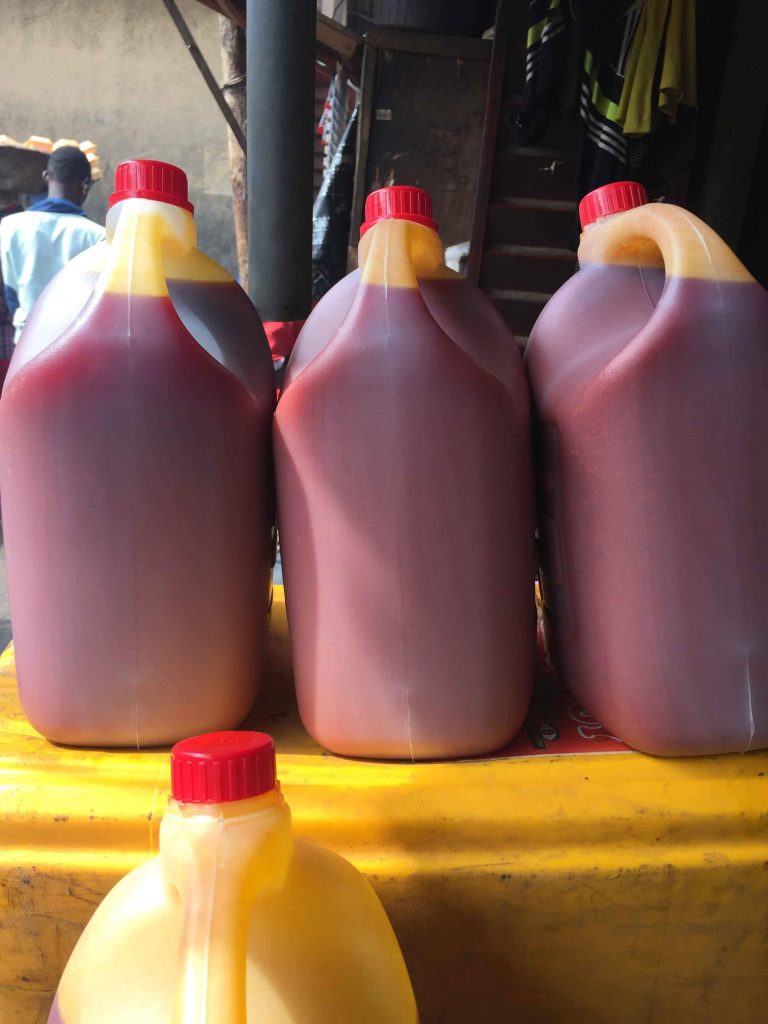
Palm oil is the heartbeat of Nigerian cooking. Egusi soup without palm oil is just a bowl of sadness. Banga soup without it does not exist. It gives Nigerian cuisine its color, its richness, and that unmistakable depth of flavor that no other oil can replicate.
However, palm oil is high in saturated fats, which can raise “bad” cholesterol (LDL) levels, increasing heart disease risk if consumed in large quantities. That is already concerning enough. But here is where it gets worse.
The problem arises when palm oil is overheated or reused multiple times. It can release harmful free radicals and increase the risk of cancer. Many Nigerian kitchens, particularly those preparing food at scale, including street food vendors, mama-put joints, and fast food canteens, routinely reheat the same palm oil multiple times throughout the day. Reheating palm oil, common in some street foods, can produce trans fats, which are even worse for heart health.
Trans fats are the dietary equivalent of slow poison. They lower good cholesterol (HDL), raise bad cholesterol (LDL), promote inflammation, and significantly increase the risk of heart disease and stroke.
What you can do instead:
- Use fresh palm oil for every cooking session. Do not reuse it.
- Reduce the quantity. Nigerian soups can be delicious with less oil than you think.
- Choose unrefined, cold-pressed red palm oil over heavily processed versions.
- Supplement with other oils like olive oil or coconut oil for lighter cooking.
3. Fufu and Eba: The Nigerian Swallow Food Destroying Your Blood Sugar

Fufu, eba, pounded yam, amala, semo. These are the swallows that define the Nigerian dining experience, the starchy foundation beneath the soup that the whole meal is built around. They are eaten daily, sometimes at every meal, and they occupy a near-sacred place in Nigerian food culture.
The health concern is not so much what the swallows taste like but how they behave inside the body. These foods are almost entirely made of refined or starchy carbohydrates with little to no fiber. When you eat them, your body breaks them down rapidly into glucose, which floods the bloodstream. Your pancreas scrambles to release insulin, your blood sugar spikes, then crashes, and the cycle repeats meal after meal, day after day.
Semo contributes to insulin resistance when consumed frequently, which increases your risk of type 2 diabetes. This same concern applies to eba and refined fufu made from processed cassava. The more often you eat them, the harder your body has to work to keep blood sugar stable, and eventually, the system starts to break down.
Beyond diabetes risk, cassava-based fufu carries another danger that most people do not know about. Cassava contains compounds called cyanogenic glycosides that can release cyanide if it is not processed correctly. Improperly prepared cassava can lead to cyanide poisoning, causing symptoms like dizziness and nausea, and in severe cases, can be very dangerous.
What you can do instead:
- Go for swallows like oat flour, unripe plantain flour, or amala made from real yam or cassava. These are more fibrous and better for your gut and blood sugar.
- Reduce portion size. The typical Nigerian swallow portion is significantly larger than what the body needs at one sitting.
- Buy cassava products from reputable sources where proper processing is guaranteed.
- Eat swallows alongside protein-rich soups (egusi, ogbono, vegetable soups) to slow glucose absorption.
4. Indomie and Instant Noodles: The Nigerian Food Villain in Every Home

Ask any Nigerian who grew up in the 1990s or 2000s about Indomie and watch their face light up like it is Christmas morning. The quick boil, the seasoning powder, the fried egg cracked on top. It is comfort food in its purest, most accessible form. It is also one of the most nutritionally bankrupt things you can regularly put in your body.
Instant noodles like Indomie, Golden Penny, or Chikki are fast, cheap, and easy to prepare, but they are full of sodium, preservatives, and low-quality fats. That little seasoning sachet that makes the noodles taste so good? It contains enormous amounts of sodium, often more than half of an adult’s recommended daily intake in a single serving. Sodium at those levels is directly linked to high blood pressure.
The noodles themselves are made from refined wheat flour with virtually no dietary fiber and almost no vitamins or minerals. They provide calories without nutrition, which means they fill your stomach temporarily but leave your body starved of the nutrients it needs. Frequent consumption has been linked to poor diet quality, kidney strain from excess sodium, and metabolic syndrome.
What you can do instead:
- Treat Indomie as an occasional snack, not a main meal.
- When you do eat it, add real vegetables (spinach, carrots, green onions) and protein (egg, chicken, fish) to improve nutritional value.
- Replace at least some noodle meals with locally grown alternatives like boiled yam with egg sauce, oatmeal, or moi moi.
- Check sodium content on labels. Some brands are significantly saltier than others.
5. Soft Drinks and Sugary Beverages: The Nigerian Food Culture Killing Silently

No Nigerian party is complete without a crate of chilled soft drinks. No suya experience feels right without a cold Coke or Fanta in hand. Soft drinks have become so embedded in Nigerian social culture that refusing one at a gathering can feel almost rude. And yet, they are among the single most damaging items in the modern Nigerian diet.
One bottle of soda can contain up to 12 teaspoons of sugar, that is more than your body needs in a whole day. Over time, this can cause obesity, diabetes, liver problems, and even heart disease. NAFDAC has warned about the increasing sugar content in fizzy drinks, especially among young Nigerians.
When you drink liquid sugar, the body processes it differently than solid food. It bypasses the fullness signals that would normally slow you down, so you consume enormous quantities of sugar without feeling full. That sugar goes straight to the liver, where it is converted to fat. Over time, this contributes to fatty liver disease, insulin resistance, and weight gain, particularly around the abdomen.
The problem goes beyond Coke and Fanta. Packaged fruit juices, energy drinks, sweetened zobo from commercial producers, and even some of the popular sachet water brands with added flavor are culprits. Nigeria’s diet has been transitioning, with an increasing inclusion of high-energy, high-fat, and high-sugar processed foods and a related growing incidence of overweight, obesity, and diet-related non-communicable diseases. Sugary beverages are one of the biggest drivers of this shift.
What you can do instead:
- Swap soft drinks for water, freshly made zobo without added sugar, or tiger nut milk (kunu aya).
- If you must drink soda, do so no more than once or twice a week and avoid supersized portions.
- Make homemade fruit smoothies without added sugar using local fruits like pawpaw, watermelon, pineapple, or banana.
6. White Bread (Agege Bread): The Nigerian Food Staple That Is a Known Carcinogen
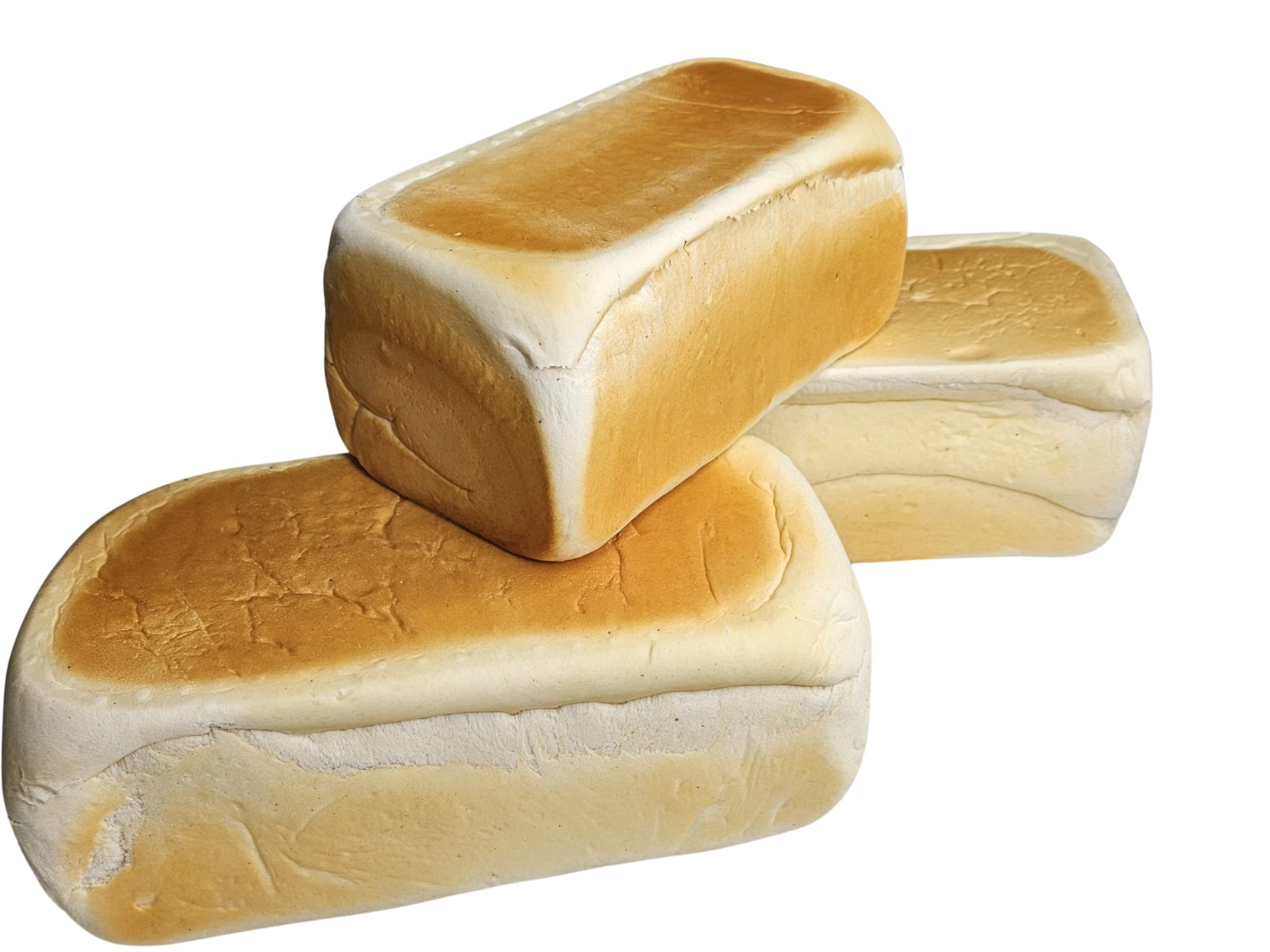
Agege bread holds a special place in Nigerian hearts, particularly in the Southwest. Soft, slightly sweet, bouncy, and impossible to eat just one slice of, it is the unofficial breakfast of Lagos and beyond. Paired with beans, fried egg, or even butter and jam, it is the kind of food that feels like home.
But Agege bread carries a serious and largely unknown danger. Agege bread is made from highly processed white flour and contains potassium bromate, a flour enhancer and, unfortunately, a known carcinogen that damages the nervous system. Potassium bromate has been banned in many countries including the United Kingdom, Canada, and the European Union because of its direct link to cancer in animal studies. In Nigeria, it continues to be used widely by commercial bakeries.
Beyond the bromate issue, white bread made from refined flour behaves similarly to sugar in the body. It is digested rapidly, spikes blood sugar, and offers almost no fiber, vitamins, or minerals. Eating it daily as a staple contributes to insulin resistance, weight gain, and the kind of slow metabolic damage that only becomes visible years later when a doctor mentions pre-diabetes.
What you can do instead:
- Choose whole wheat bread from brands that certify they are potassium bromate-free.
- Reduce overall bread consumption and replace some bread meals with local whole foods like boiled plantain, sweet potato, or corn.
- When buying bread, check if the packaging explicitly states “bromate-free.” Many artisan bakeries now offer safer alternatives.
7. Deep-Fried Snacks (Puff Puff, Akara, Chin Chin): The Nigerian Street Food Quietly Adding Years to Your Waistline
Few things are more joyful than fresh puff puff at a party, still warm from the oil, soft in the center, lightly golden on the outside. Or a bag of akara bought from the roadside vendor at 7am. These snacks are not just food. They are memories, traditions, and genuine happiness in edible form.
They are also some of the most oil-saturated foods in the Nigerian diet. Deep-fried snacks like puff puff, akara, buns, and plantain chips are irresistible favourites in Nigeria. The issue is not the ingredients themselves. Beans (the base of akara) are actually incredibly nutritious, high in protein, fiber, and iron. The problem is what happens when they are submerged in hot oil repeatedly.
Oil-soaked akara can be high in trans fats, which contribute to visceral fat and increase your risk for heart disease. Visceral fat is the dangerous kind, the type that accumulates around your internal organs rather than just under the skin, and it is directly linked to heart disease, diabetes, and certain cancers.
Puff puff adds another layer of harm because it combines refined white flour with sugar and deep frying. Three major risk factors in one snack. Eaten occasionally at celebrations, these snacks are mostly harmless. Eaten several times a week as a regular part of the diet, they accumulate into serious long-term risk.
What you can do instead:
- Make moi moi instead of akara. Same beans, far less oil, equally delicious.
- Try baked or air-fried versions of puff puff or chin chin at home.
- Treat these snacks as what they are: party food. Reserve them for special occasions rather than everyday eating.
8. Smoked Fish: The Nigerian Food Ingredient That Comes With a Cancer Warning

Smoked fish is a defining ingredient in much of Nigerian cooking. Virtually every soup, from egusi to vegetable to afang to bitterleaf, calls for smoked catfish, stockfish, or one of the dozens of locally smoked varieties available in every market. The smoky flavor it adds is irreplaceable, and many Nigerian cooks would sooner compromise the entire dish than omit the smoked fish.
Unfortunately, the smoking process that creates that beloved flavor is also producing something far less desirable. The potential danger associated with the smoking of fish over wood or charcoal is Polycyclic Aromatic Hydrocarbons (PAH), a class of carcinogens formed when wood or charcoal is burned and deposited on the food being smoked. They are carcinogenic.
PAHs are the same compounds found in cigarette smoke and vehicle exhaust. They work by damaging DNA, which over time can lead to abnormal cell growth and cancer. Fish that is heavily smoked, very dark in color, and has absorbed maximum wood smoke has the highest PAH content.
Beyond cancer risk, improperly stored smoked fish carries microbial contamination risks. Fish that has not been stored at the correct temperature has a high risk of being contaminated with histamine, a toxin produced by bacteria in fish.
What you can do instead:
- Use smoked fish as a flavoring rather than the main protein. A small piece for flavor is safer than large quantities.
- Consider substituting lightly smoked or dried fish rather than heavily charred varieties.
- Buy from vendors who store fish properly, under refrigeration or in clean, dry conditions.
- Supplement with fresh grilled or oven-baked fish, which provides the same protein without the PAH exposure.
9. Groundnuts (Roasted): The Popular Nigerian Snack With a Hidden Toxin Problem

A cone of roasted groundnuts from the roadside seller is one of Nigeria’s most wholesome snacks. It is cheap, filling, protein-rich, and practically a national institution. Children eat them on the way home from school. Adults snack on them during long commutes. They are shared at football viewing centers, at bus stops, at family gatherings.
Groundnuts, in their natural state, are genuinely healthy. They are packed with protein, healthy fats, magnesium, and vitamin E. The problem is what happens when they are not properly dried and stored before roasting.
Roasted groundnuts that are not properly dried or preserved can harbour a group of fungi or moulds that produce a poisonous substance known as aflatoxins, which can contaminate food crops and pose a serious health threat. Aflatoxins are among the most potent natural carcinogens known to science. They are produced by Aspergillus moulds that thrive in warm, humid conditions, exactly the conditions present in many Nigerian markets and storage facilities.
Chronic low-level aflatoxin exposure, which happens when you regularly eat groundnuts or groundnut products from contaminated sources, has been linked to liver cancer, immune suppression, and growth stunting in children. The terrifying part is that you cannot taste or smell aflatoxin. The groundnuts can taste and look perfectly fine.
What you can do instead:
- Buy groundnuts only from vendors who keep them in dry, clean conditions.
- Avoid groundnuts that are shriveled, discolored, or have an unusual smell.
- Store groundnuts at home in a dry, cool place and consume within a reasonable time frame.
- Opt for commercially packaged groundnut products from regulated brands that test for aflatoxin levels.
10. Kunu and Fermented Drinks: The Nigerian Food-Drink Hybrid That Can Make You Seriously Ill
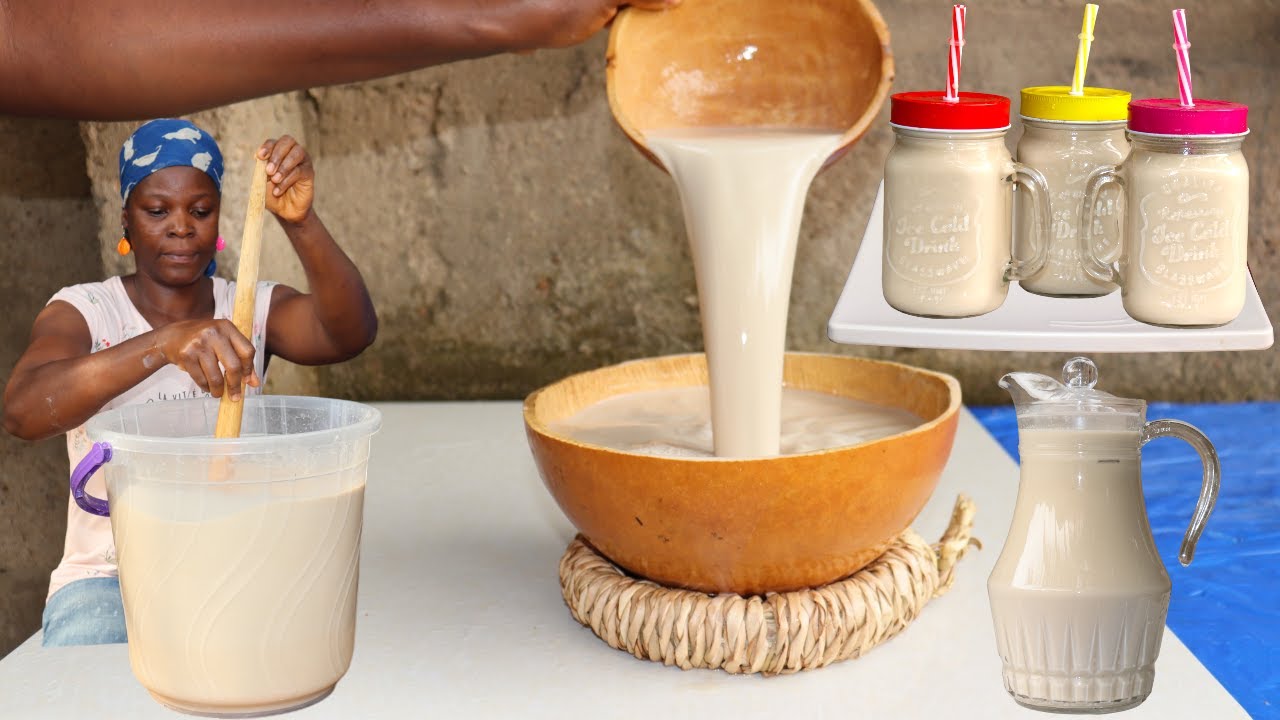
Kunu is a beautifully refreshing traditional drink made from fermented millet, sorghum, or maize. On a hot Lagos afternoon, or after a long journey in the north, there is perhaps nothing more satisfying. It is a cultural treasure, deeply nutritious in theory, and sold everywhere from bus stops to markets to roadside stalls.
The issue is preparation. While fermentation has health benefits, it also poses a contamination risk if not done properly. Fermentation that is done without proper hygiene can lead to bacteria like E. coli and Salmonella, which cause foodborne illnesses.
E. coli and Salmonella infections can cause severe diarrhea, vomiting, dehydration, and in vulnerable populations, including children, pregnant women, and the elderly, they can become life-threatening. Many kunu sellers operate in open-air conditions without refrigeration, clean water, or proper food handling practices. The drink sits in containers exposed to heat and insects throughout the day, creating an ideal environment for bacterial growth.
What you can do instead:
- Prepare kunu at home where you can control hygiene.
- If buying commercially, choose sealed, refrigerated products from established brands.
- Do not consume kunu that has been sitting out for hours, especially in warm conditions.
- Trust your instincts. If the taste is sharply sour, unusually bitter, or off in any way, discard it.
The Bigger Picture: How Nigeria’s Changing Diet Is Fueling a Health Crisis
These individual food concerns do not exist in isolation. They are symptoms of a broader and deeply worrying dietary shift happening across Nigeria. According to research published in the scientific literature, while a traditional Nigerian diet is still relatively healthy from an international perspective, it has indeed been transitioning, with an increasing inclusion of high-energy, high-fat, and high-sugar processed foods and a related growing incidence of overweight, obesity, and diet-related non-communicable diseases.
This transition is driven by urbanization, time pressure, rising processed food availability, and the simple economics of cheap, fast calories. A busy Lagos professional does not have time to cook fresh ogbono soup every night. Indomie takes five minutes. Agege bread requires no cooking at all. And soft drinks are literally cheaper than bottled water in many parts of the country.
The consequences are real and measurable. Recent research found that the prevalence of generalized obesity was 24%, and overweight was 33% in studied Nigerian populations, while known hypertension affected 26.6% of respondents. These are not small numbers. They represent millions of Nigerians living with preventable, diet-driven conditions.
The World Health Organization’s data on Nigerian nutrition paints a clear picture: diabetes and hypertension rates are rising, and dietary choices are among the primary modifiable risk factors.
Nigerian Food Health Risk Comparison Table
The table below outlines the most popular Nigerian foods discussed in this article, their primary health risk, the condition they most commonly contribute to, and a practical safer alternative.
| Popular Nigerian Food | Primary Health Risk | Main Condition Linked | Safer Alternative |
|---|---|---|---|
| Suya | HCAs and PAHs (carcinogens) | Cancer, hypertension | Grilled fish with less char |
| Palm Oil (overheated) | Trans fats, free radicals | Heart disease, obesity | Fresh, cold-pressed palm oil in moderation |
| Fufu/Eba/Semo | High glycemic index | Type 2 diabetes, insulin resistance | Oat flour swallow, plantain flour |
| Indomie/Instant Noodles | Extreme sodium, low nutrition | Hypertension, kidney strain | Boiled yam with egg sauce |
| Soft Drinks | Liquid sugar overload | Obesity, fatty liver, diabetes | Unsweetened zobo, water |
| Agege Bread | Potassium bromate, refined flour | Cancer risk, blood sugar spikes | Whole wheat bread (bromate-free) |
| Puff Puff/Akara | Deep-fried trans fats | Visceral fat, heart disease | Moi moi, baked alternatives |
| Smoked Fish (heavily charred) | Polycyclic Aromatic Hydrocarbons | Liver and digestive cancer | Lightly dried fish, fresh grilled fish |
| Groundnuts (poor storage) | Aflatoxins | Liver cancer, immune damage | Sealed commercial groundnut products |
| Kunu (commercially sold) | E. coli, Salmonella contamination | Foodborne illness, severe diarrhea | Homemade kunu with proper hygiene |
What Nigerian Nutrition Scientists Actually Recommend
Here is something important to understand: Nigerian nutrition researchers and medical professionals are not telling you to abandon your culture. They are not asking you to replace egusi soup with a kale salad or swap pounded yam for quinoa. That is neither realistic nor necessary.
What the science actually recommends is far more achievable.
Cook fresh more often. The healthiest version of Nigerian food is the one your grandmother made from scratch in the village, not the one assembled from seasoning cubes, packaged noodles, and reheated oil. Traditional Nigerian ingredients, fresh leafy vegetables, fermented locust beans (iru/dawadawa), legumes like beans and cowpea, whole grains like guinea corn and millet, are genuinely nutritious. The problem is not Nigerian food. The problem is the shortcuts.
Reduce portion sizes of starchy swallows. Most Nigerians eat significantly more swallow than their caloric needs require. You do not need to eliminate it. Eat a moderate amount alongside a generous, vegetable-rich soup.
Use less seasoning cubes. Maggi, Knorr, and similar bouillon cubes are extraordinarily high in sodium and contain ingredients that, used in the quantities most Nigerian cooks use them, contribute meaningfully to hypertension. Learn to season with natural ingredients: onion, garlic, ginger, cloves, uziza leaves, scent leaves, and fresh pepper.
Eat more of what traditional Nigeria already has. Ugu leaves (fluted pumpkin), bitter leaf, water leaf, okra, ewedu, garden egg, African walnut (ukpa), tiger nuts, moringa, local sweet potatoes. These foods are affordable, widely available, culturally familiar, and scientifically impressive in their nutritional profiles.
The Harvard School of Public Health’s research on dietary patterns consistently shows that diets built around whole grains, legumes, vegetables, and moderate lean protein produce the best long-term health outcomes. The good news is that traditional Nigerian cooking already contains all of these elements. The challenge is reversing the drift toward processed, fried, and sugar-laden alternatives.
How to Eat Nigerian Food Without Eating Your Way to an Early Grave
None of this means you can never have suya again. It means you treat it like the special occasion food it should be, not a weekly default. Here is a practical framework for navigating Nigerian food more healthfully without losing your mind or your culture.
The 80/20 Approach. Eat whole, fresh, minimally processed Nigerian food 80% of the time. For the remaining 20%, enjoy your suya, your puff puff at a friend’s party, your Indomie on a lazy Sunday morning. This is sustainable. Perfection is not.
Cook in batches. One of the biggest reasons Nigerians reach for processed food is time. Cooking a big pot of vegetable soup or beans on Sunday and eating from it through the week eliminates most of the temptation to grab noodles or call for shawarma.
Hydrate with intention. Replace at least one daily soft drink with water, zobo, or homemade kunu. This single swap, if maintained consistently, can reduce sugar intake dramatically over a year.
Read labels. When you buy bread, check for potassium bromate. When you buy packaged snacks, check sodium levels. When you buy processed drinks, check the sugar content. Information is the beginning of power.
Talk to your doctor. If you have a family history of hypertension, diabetes, or heart disease, a conversation with a doctor or registered dietitian about your specific dietary needs is one of the most valuable investments you can make.
Conclusion: Nigerian Food Is Not the Enemy. Ignorance Is.
Nigerian cuisine, in its truest, most traditional form, is genuinely nourishing. The soups packed with leafy vegetables and legumes. The fermented and whole grain staples that dominated the diet for generations before white flour and liquid sugar arrived. The diversity of local fruits and protein sources that most urban Nigerians have drifted away from.
The problem is not that Nigerian food is bad. The problem is that the Nigerian diet has been colonized, not by foreign cultures this time, but by the food industry, by convenience, by affordability, and by a slow, quiet shift away from whole foods toward processed imitations that taste familiar but do not nourish the same way.
Suya is delicious. Palm oil is culturally essential. Puff puff is joy. Kunu is heritage. None of them have to disappear. They simply have to be treated with the respect they deserve, not as daily defaults but as part of a broader, more intentional approach to what goes on your plate.
The diseases that are climbing in Nigeria today, hypertension, diabetes, obesity, and certain cancers, are not destiny. They are not genetic fate. For most people, they are the accumulated result of daily choices made without full information. You now have more of that information than you did when you started reading this.
Use it well. Cook a little more. Drink a little less sugar. Char the suya a little less. And share this with someone you love, because the best thing about Nigerian food has always been that it is never meant to be eaten alone.
What to Read Next
This article gave you the problems. Now get the solutions.
Share this post with a family member or friend who eats any of these foods daily. You might be doing them a favor that lasts a lifetime.
Drop a comment below: Which food on this list surprised you the most? Which one are you willing to cut back on first?
This article is written for general informational and educational purposes. It does not constitute medical advice. Please consult a qualified healthcare provider or registered dietitian for personalized dietary guidance, particularly if you have an existing medical condition.