Shocking Truth: 8 Banned Food Additives Still in American Kids’ Food
You check the nutrition label. Calories? Fine. Sodium? Acceptable. Then you hit the ingredients list and run into a wall of words that look like chemistry homework. Here is the part nobody tells you: some of those unpronounceable ingredients are flat-out banned in over 30 other countries, yet they sit freely inside the snacks, cereals, and lunch foods your children eat every single day.
Why America Still Allows Banned Food Additives That Scare the Rest of the World
This is not a fringe conspiracy theory. This is regulatory reality.
The United States Food and Drug Administration operates on what critics call an “innocent until proven guilty” framework. Food additives get added to the Generally Recognized as Safe (GRAS) list, often evaluated by panels hired by the very food companies that want to use them, and they stay there until overwhelming evidence eventually forces a change. Decades can pass. Robert F. Kennedy Jr. captured this bluntly during his Senate confirmation hearing in January 2025, saying that compared to Europe, the U.S. treats any new food chemical as “innocent until proven guilty.”
The European Union operates on the opposite philosophy, the precautionary principle. If regulators cannot confirm something is safe, it does not make it onto European grocery shelves. Full stop. This is why a British child eating a bag of candy and an American child eating what looks like the same candy may actually be consuming completely different chemical cocktails.
The gap between these two approaches is not trivial. According to research from Yuka, which analyzed over three million food products, processed foods in the U.S. contain significantly more additives than those sold in Europe. Worse, some additives that are banned in dozens of countries remain fully authorized on the American market, often without any quantity limits, based on safety evaluations that in some cases date back to the 1970s.
Let us walk through the eight most concerning ultra-processed food additives banned in 30 or more countries that are still showing up in American children’s food, why they are there, and what the science actually says.
1. Red Dye No. 3: The Banned Food Additive That Took 35 Years to Remove from Cosmetics
Red Dye No. 3, or erythrosine, is a synthetic cherry-red dye found in everything from maraschino cherries and fruit cocktails to gummy candies, popsicles, and strawberry-flavored drinks. Here is the kicker: the FDA banned this very same dye from cosmetics and externally applied drugs back in 1990, after finding that it causes cancer in animals, specifically thyroid tumors in male rats.
Then it left the dye sitting comfortably in the food supply for another 35 years.
It was not until January 2025 that the FDA finally announced it would revoke authorization for Red Dye No. 3 in food and ingested drugs, giving manufacturers until 2027 to reformulate. The European Union, Australia, and New Zealand banned Red Dye No. 3 long before any of this. Meanwhile, American children ate Fruit by the Foot, Trolli Sour Crunchy Crawlers, Jelly Belly candies, and Popsicles containing it throughout those decades. The dye has also been linked to hyperactivity and other neurobehavioral effects in children, adding a behavioral concern on top of the cancer risk question.
Where it is found: Maraschino cherries, fruit cocktail, canned fruit, gummy candies, popsicles, strawberry-flavored drinks, some gummy vitamins, cough syrups
Where it is banned: European Union, Australia, New Zealand
FDA status: Banned as of January 2025, full compliance required by 2027
2. Titanium Dioxide: The DNA-Damaging Banned Food Additive Hiding in Plain Sight
Titanium dioxide is used to make foods look whiter, brighter, and more visually appealing. Think powdered donuts, Skittles, Sour Patch Kids watermelon candies, Hostess cupcakes, Little Debbie Zebra Cakes, coffee creamers, salad dressings, and chewing gum. It is literally a white paint pigment being added to children’s candy.
In 2021, the European Food Safety Authority (EFSA) conducted an exhaustive review of thousands of studies and reached a landmark conclusion: it could no longer rule out genotoxicity after the consumption of titanium dioxide particles. Genotoxicity means the ability of a substance to damage DNA within a cell, potentially triggering mutations that could lead to cancer. The EU banned it from food products in 2022. At least 36 countries, including Turkey and most of the EU, have now said no to titanium dioxide in food.
The FDA still considers it safe, as long as the amount does not exceed 1% of the food’s total weight. What makes this particularly frustrating is that the FDA does not even require food makers to list “titanium dioxide” on the ingredients label. It can simply appear as “artificial color.” As Melanie Benesh, vice president of governmental affairs at the Environmental Working Group, told TIME Magazine: a chemical that builds up in the body and could harm the immune and nervous systems should not be in candies and treats marketed to children.
Where it is found: Skittles, Sour Patch Kids, powdered donuts, Hostess products, icing, salad dressings, coffee creamers, chewing gum
Where it is banned: European Union (2022), 36+ countries globally
FDA status: Still permitted, up to 1% by weight
3. Potassium Bromate: A Possible Carcinogen in Your Child’s Hamburger Bun
Potassium bromate has been used in American baking since 1916. It strengthens dough, helps bread rise higher, and gives baked goods a firmer, more pleasing texture. Hamburger buns, hot dog rolls, white breads, crackers, and some pizza doughs have long relied on it. The problem is that the International Agency for Research on Cancer (IARC) classified potassium bromate as “possibly carcinogenic to humans” all the way back in 1999. California lists it as a known carcinogen.
Animal studies have repeatedly shown that ingesting potassium bromate increases the incidence of kidney tumors, thyroid cancer, and cancers in other organs. The UK banned it. Canada banned it. Brazil and Argentina banned it. The European Union banned it. Yet in the United States, potassium bromate is still considered a “prior sanctioned substance,” which means it was approved before modern food safety laws existed and gets to stay on shelves because of that grandfathered status.
California’s 2023 Food Safety Act, signed by Governor Gavin Newsom, finally banned potassium bromate from foods sold in the state, along with three other additives. The ripple effect of that ban is already being felt nationally because it is simply not practical for food companies to manufacture two separate versions of their products. But outside California, your child’s school lunch hamburger bun may still be made with a dough conditioner that most of the developed world considers too risky to use.
Where it is found: Hamburger buns, hot dog rolls, white bread, crackers, pizza dough, some packaged baked goods
Where it is banned: UK, Canada, Brazil, Argentina, EU, and many others
FDA status: Still permitted under “prior sanctioned substance” rules
4. Brominated Vegetable Oil: The Flame Retardant Cousin Lurking in Kids’ Sodas
Brominated vegetable oil, or BVO, is an emulsifier. It was added to citrus-flavored sodas and sports drinks to prevent the citrus oil from separating and floating to the surface. For decades, it sat in products like Mountain Dew, Fanta, and Powerade. The reason BVO raises alarms is that it contains bromine, a chemical element also found in flame retardants. It builds up in body fat and has been linked in animal studies to neurological problems, thyroid dysfunction, heart and liver damage, and behavioral and reproductive issues.
The European Union, the UK, and Japan banned BVO decades ago. The FDA finally announced a proposal to revoke BVO authorization in late 2023 and issued a final ruling in 2024, giving manufacturers until August 2, 2025 to remove it from their products. PepsiCo and Coca-Cola had already voluntarily removed BVO from their major brands years earlier to maintain consistency for their international markets. But smaller brands, store-brand sodas, and some regional beverages still contained it well into the transition period.
The BVO saga is a perfect illustration of the core problem. Europe acted on BVO’s risks decades ago. The FDA waited for more evidence, then waited some more, and finally acted in 2024, somewhere between 20 and 30 years behind international standards.
Where it is found: Some citrus-flavored sodas, sports drinks, store-brand beverages
Where it is banned: EU, UK, Japan, and others
FDA status: Banned as of 2024, full removal deadline August 2025
5. Propylparaben: The Fertility-Disrupting Banned Food Additive in Kids’ Tortillas and Muffins
Propylparaben is an antimicrobial preservative added to baked goods, tortillas, muffins, and trail mix to extend shelf life and prevent mold. You might recognize “parabens” from the beauty industry, where brands have spent years marketing themselves as “paraben-free” because of their association with hormone disruption. What most consumers do not realize is that propylparaben is not just in shampoo. It is in food.
The European Union banned propylparaben from food products back in 2006, citing concerns about endocrine disruption. Animal studies found that male rats fed propylparaben experienced a significant decrease in sperm count. Human studies in women found associations between propylparaben exposure and diminished fertility and breast cancer. A recent comprehensive review of both animal and human studies concluded there is insufficient evidence to confirm that propylparaben is safe in foods and cosmetics.
The FDA still designates propylparaben as GRAS. It is still found in Cafe Valley muffins, Weight Watchers cakes, various tortilla brands, and some trail mixes. The EU acted on this 19 years ago. American children’s food products continue to use it because, under the GRAS framework, no one with regulatory authority has yet told food companies they cannot.
Where it is found: Packaged muffins, cakes, flour tortillas, trail mix, some baked goods
Where it is banned: European Union (2006), and others
FDA status: Still designated GRAS
6. Azodicarbonamide (ADA): The Yoga Mat Chemical in Your Child’s Bread
Azodicarbonamide, mercifully abbreviated as ADA, is a dough conditioner and bleaching agent used in commercial bread, rolls, and other flour-based baked goods. It helps dough rise and improves the texture of the final product. It is also used to make yoga mats, shoe soles, and foam plastics. That dual industrial use made headlines when it was discovered in 2014 that Subway was using it in its bread dough. The subsequent public outcry prompted Subway to remove it, though many other manufacturers continue to use it.
The European Union bans ADA in food. Australia bans it too. In Singapore, using ADA in food is treated with striking seriousness, with penalties that reportedly include substantial fines and potential imprisonment. Animal studies have shown that ADA may be an organ and cellular toxin. Research has also found significant behavioral changes in rats fed an ADA-containing diet. Additionally, when baked, ADA can form urethane, a compound with its own carcinogenic concerns.
Yet in the U.S., products like some Jimmy Dean Delights breakfast sandwiches and Pillsbury Breadsticks have contained ADA. It remains perfectly legal under FDA rules because the agency has yet to find the evidence it considers sufficient to take action, even as dozens of countries decided long ago that the risk was not worth taking.
Where it is found: Commercial bread, rolls, baked goods, some breakfast sandwich products
Where it is banned: EU, Australia, and others
FDA status: Still permitted
7. BHA and BHT: The Preservatives Classified as Carcinogens Still on American Breakfast Tables
Butylated hydroxyanisole (BHA) and butylated hydroxytoluene (BHT) are synthetic antioxidant preservatives added to chips, crackers, cereals, granola bars, premade baked goods, and cooking oils to prevent fats from going rancid. You will find them in Kellogg’s cereals, Jiffy products, Stouffer’s frozen meals, and Pillsbury items. They are arguably among the most common food additives in the American pantry.
The EU bans both BHA and BHT from most food products. Japan limits BHT. The U.S. National Toxicology Program concluded in 2021 that BHA is “reasonably anticipated to be a human carcinogen.” The U.S. Department of Health and Human Services has echoed this classification. A petition to ban BHA was first filed with the FDA in 1990, and the agency has been “considering” it ever since. Thirty-four years later, it is still classified as GRAS.
BHT has been linked to hormonal disruption in addition to cancer concerns in animal studies. The EWG notes that these two chemicals were originally designed to prevent oxidation in industrial products long before they found their way into the food supply. Their continued presence in breakfast cereals and snack foods that are specifically marketed to and eaten by children represents one of the most glaring examples of the gap between what the science suggests and what the regulatory system has managed to do about it.
Where it is found: Breakfast cereals, chips, crackers, granola bars, frozen meals, cooking oils
Where it is banned: European Union, and others
FDA status: Still classified as GRAS despite carcinogen concerns
8. Synthetic Food Dyes (Red 40, Yellow 5, Yellow 6): The Hyperactivity Dyes Targeting Children
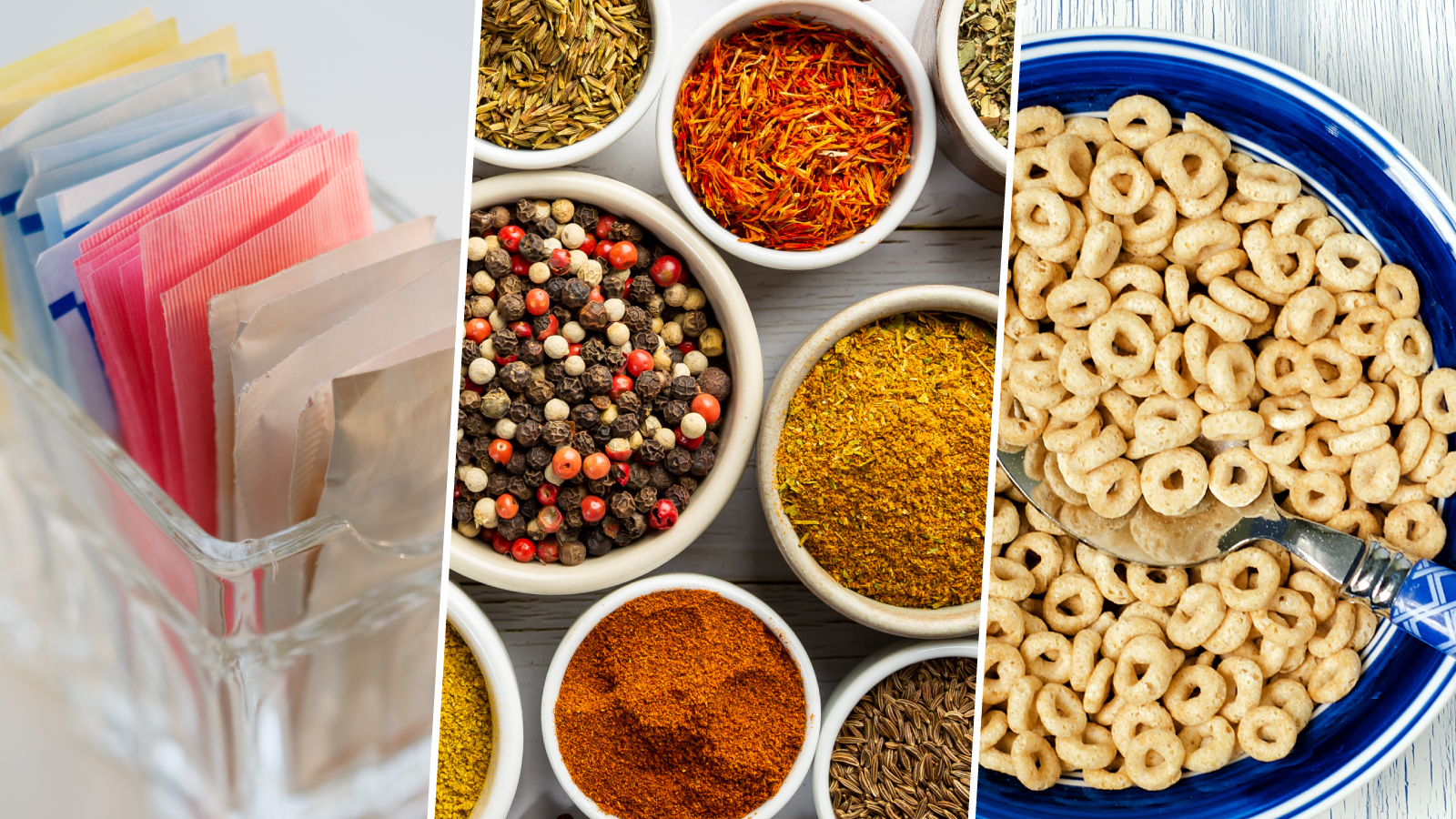
Red 40, Yellow 5, and Yellow 6 are petroleum-derived synthetic dyes that make food look vibrantly appealing. They are found in everything from Kool-Aid and Gatorade to Lucky Charms, Skittles, Pop-Tarts, Jell-O, and virtually every brightly colored snack food marketed directly at children. They are the food industry’s version of a flashing neon sign aimed squarely at young eyes.
In 2021, scientists at the California Environmental Protection Agency’s Office of Environmental Health Hazard Assessment completed a multi-year evaluation and found that consumption of synthetic food dyes can result in hyperactivity and other neurobehavioral problems in children, including inattentiveness and restlessness. These are classic components of an ADHD diagnosis. The scientists also determined that the FDA’s existing limits on these dyes are based on outdated data and no longer adequate to protect children.
The European Union does not ban Red 40, Yellow 5, or Yellow 6 outright, but it does require a stark warning label on all foods containing them: “may have an adverse effect on activity and attention in children.” Many food manufacturers reformulate their products for European markets to avoid this warning, using natural colorants like beetroot, turmeric, and annatto instead. The exact same products sold to American children use the synthetic dyes without any warning whatsoever.
A 2012 review also found that these three dyes have been contaminated with carcinogens in past studies. The FDA has not acted to ban them. Twenty or more states have now introduced legislation to ban or restrict these dyes in school food programs, and some states like California are moving toward broader bans.
Where it is found: Cereals, candy, sports drinks, fruit snacks, Pop-Tarts, gelatin, processed meats
Where it is banned: Not fully banned in EU, but require mandatory warning labels
FDA status: Still permitted with no required warning labels in the U.S.
The Comparison Table: 8 Banned Food Additives vs. Where They Are Banned
| Additive | Primary Use | Countries/Regions Banned | Health Concerns | US FDA Status |
|---|---|---|---|---|
| Red Dye No. 3 | Red color in candy and drinks | EU, Australia, New Zealand | Cancer in animals, neurobehavioral effects in children | Banned Jan 2025, compliance by 2027 |
| Titanium Dioxide | White color additive | EU (2022), 36+ countries | DNA/chromosome damage, accumulates in body | Still permitted |
| Potassium Bromate | Dough conditioner in bread | UK, Canada, Brazil, EU, 30+ countries | Possible carcinogen (IARC), kidney and thyroid tumors | Still permitted (prior sanctioned) |
| Brominated Vegetable Oil (BVO) | Emulsifier in citrus drinks | EU, UK, Japan | Neurological damage, thyroid dysfunction, reproductive issues | Banned 2024, compliance by Aug 2025 |
| Propylparaben | Antimicrobial preservative | EU (2006), and others | Endocrine disruption, fertility issues, breast cancer links | Still GRAS |
| Azodicarbonamide (ADA) | Dough conditioner | EU, Australia | Organ toxin, behavioral changes, urethane formation | Still permitted |
| BHA and BHT | Synthetic preservatives | EU, and others | Reasonably anticipated human carcinogens, hormone disruption | Still GRAS |
| Red 40, Yellow 5, Yellow 6 | Synthetic food dyes | Warning labels required in EU | Hyperactivity in children, potential carcinogen contamination | Still permitted, no warning required |
Why Does the FDA Allow These Banned Food Additives to Stay?
This is the question that every frustrated parent eventually asks. The answer lies in two deeply structural problems with the American food regulatory system.
The first is the GRAS loophole. The Generally Recognized as Safe designation, which emerged from a 1958 Congressional act, was originally intended for common, everyday ingredients like salt, vinegar, and flour. Over time, it became the mechanism by which food companies introduce new chemicals into the food supply with minimal oversight. A company can convene its own expert panel, declare a substance GRAS, and begin using it without even notifying the FDA. The Government Accountability Office criticized this process as far back as 2010, noting that the FDA had no reliable way to ensure the safety of new GRAS determinations. A study reviewing 403 GRAS notices found that companies routinely used the same small circle of consultants to make these determinations.
The second problem is speed. Or rather, the absence of it. Red Dye No. 3 was banned from cosmetics in 1990 because it caused cancer in animals. It stayed in food for 35 more years. A petition to ban BHA was filed in 1990 and the FDA is still deciding. BVO was banned in Japan and Europe decades ago and the FDA acted in 2024. According to the Environmental Working Group, the FDA has been doubting the safety of BHA since 1978, yet the substance remains classified as safe for consumption today.
Part of this is resource constraints. The FDA is underfunded relative to its massive scope of responsibility. But part of it is also the enormous lobbying power of the food industry, which has consistently argued that existing additives are safe and that reformulation would be unnecessary and costly. Consumer Reports has noted that in many cases, safer alternatives to these additives already exist and are often less expensive. The barrier is not technology. It is inertia.
What Is Actually Changing Right Now?
The landscape is shifting, and faster than at any point in the past few decades.
California’s 2023 Food Safety Act created a ban on BVO, potassium bromate, propylparaben, and Red Dye No. 3. Because California represents the largest single consumer market in the United States, food companies cannot easily justify producing two separate formulations. In practice, California’s ban tends to function as a de facto national standard over time, as manufacturers quietly reformulate rather than manage separate supply chains.
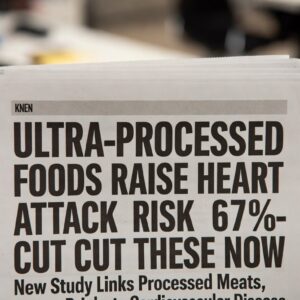
The MAHA (Make America Healthy Again) Report, published by the Trump administration in May 2025, claimed that approximately 70% of branded food products available in American grocery stores today are ultra-processed. The report attributed nutrient depletion, increased caloric intake, and exposure to synthetic food additives to these products. On July 25, 2025, the FDA published a formal Request for Information seeking public input to help develop a uniform definition for ultra-processed foods in the U.S. food supply, signaling that the federal government intends to regulate them.
According to the Penn Leonard Davis Institute of Health Economics, similar legislation restricting food additives is now pending in more than 20 additional states, beyond those that have already enacted bans. Wisconsin, Louisiana, and Texas have all introduced or enacted warning label legislation that would require food products to disclose any ingredient that is “banned in Australia, Canada, the European Union, or the United Kingdom.” Multiple states are also moving to prohibit school food programs from serving any products containing these additives.
The momentum is undeniable. The question is how many more years of childhood exposure will pass before federal standards catch up.
What Can Parents Do Right Now?
You do not have to wait for the FDA to act. There are practical, concrete steps you can take today.
Read every ingredient label, not just the nutrition facts. The nutrition facts panel will not show you propylparaben or azodicarbonamide. Only the ingredient list will. If you see “bromated flour,” that means potassium bromate. If you see “artificial color” without a specific name, that may be titanium dioxide.
Prioritize certified organic packaged foods when possible. Organic certification under USDA standards prohibits the use of most of these synthetic additives. It is not a perfect solution, and organic products cost more, but they do provide a meaningful layer of protection.
Use consumer tools. The EWG’s Food Scores database and Healthy Living app allow you to scan or search food products and see exactly which concerning additives they contain. The Yuka app does the same and is particularly useful for quick grocery store scanning.
Look for products specifically reformulated for international markets. Some major brands now use the same formulation globally and have voluntarily removed banned additives. Some have not. Checking brand websites or using food scoring apps can help you identify which is which.
Limit ultra-processed foods overall. This advice gets repeated so often it risks becoming background noise, but the core logic is sound. A diet built primarily around whole, minimally processed foods naturally sidesteps almost every one of the additives on this list. No one is suggesting perfect eating at every meal. But shifting the ratio matters.
The Bigger Picture: Children Deserve Better Than This
There is something deeply uncomfortable about the realization that the same global food companies sell American children products containing additives that their international counterparts would never be allowed to eat. A Skittles sold in Britain uses natural colorants. The version sold in America uses synthetic petroleum-derived dyes. A bread roll sold in Germany does not contain potassium bromate. The version sold in America may well have it baked right in.
This is not about fearmongering. Food is complicated, dose matters enormously, and not every additive on every list is equally dangerous. Some of these concerns are supported by robust human data. Others rest more heavily on animal studies. The science is never perfectly settled. But the regulatory asymmetry, the fact that dozens of countries made precautionary decisions decades ago while the U.S. is still having the same arguments, is hard to explain as anything other than a system that has consistently prioritized industry convenience over childhood health.
The good news is that the conversation has shifted. California is acting. States are introducing bills at an unprecedented rate. The FDA is moving, slowly but more visibly than before. Consumer awareness has never been higher. And food companies, facing both regulatory pressure and market pressure from consumers who actually read labels now, are beginning to reformulate.
The science of what happens when children consume these additives over years and decades is still being written. The precautionary approach says: why keep rolling the dice? Countries that banned these substances did not do so because they hate American food companies. They did it because when you cannot rule something out as harmful, particularly for children whose developing bodies and brains are more vulnerable, the prudent move is to keep it off the plate.
That principle should not require decades of advocacy to become common sense.
Conclusion
Eight additives. Banned in 30 or more countries. Still in American children’s food.
The story of how they got there and why they stay is not one of malice but of a regulatory system built for a different era, captured in part by the industry it was designed to police, and chronically underfunded to do the work of catching up with the science. The GRAS process, which was meant to cover flour and vinegar, ended up as the vehicle for thousands of synthetic chemicals to enter the food supply without meaningful independent review.
The tide is turning. California’s Food Safety Act has created a template. The FDA banned Red Dye No. 3 in 2025 and BVO in 2024. Over 20 states have pending legislation. The MAHA Commission has put ultra-processed food squarely on the national policy agenda for the first time. None of this undoes the decades that have passed, but it does signal that the assumption that America’s food supply is automatically safe is no longer going unchallenged.
Until federal standards catch up with international norms, the most powerful tool you have is the ingredient label. Use it.
Share This With Every Parent You Know
If this article helped you understand what is actually in your child’s food, share it. Forward it to a parent in your school community, a grandparent who buys snacks, or a friend who has been wondering why their kids cannot sit still after lunch.
Drop a comment below: Which of these additives surprised you most? Have you already started checking labels at the grocery store? We want to hear from you.
Sources consulted for this article include reporting from TIME Magazine, Consumer Reports, the Environmental Working Group (EWG), the European Food Safety Authority (EFSA), the International Agency for Research on Cancer (IARC), the California Environmental Protection Agency, and the Penn Leonard Davis Institute of Health Economics.