Harvard Oncologist Reveals 6 Nutrition Lies You Still Believe That Are Quietly Destroying Your Health
You have been eating “right” for years. So why does it feel like your body is slowly falling apart?
The answer might not be what you are eating. It might be what you think you know about food.
In January 2026, Dr. Ezekiel J. Emanuel, a Harvard-trained oncologist, former chair of the Department of Bioethics at the National Institutes of Health, former faculty member at Harvard Medical School, and one of the world’s leading health policy experts, published a candid essay that shook the nutrition world. In it, he listed six nutrition myths he desperately wishes would disappear. Not fringe theories. Not Instagram wellness nonsense. These are the same beliefs that millions of careful, well-intentioned people carry with them every single day, including beliefs reinforced by doctors, magazines, and decades of public health messaging.
Dr. Emanuel is also the author of “Eat Your Ice Cream: 6 Simple Rules for a Long and Healthy Life,” a book that draws on a lifetime of clinical and research experience to argue that health is built on sustainable habits, not extreme discipline. His message is refreshingly human: good nutrition is not about punishment, deprivation, or willpower. It is about making choices that work across years, not just weeks.
Some of the myths he debunks are harmless in isolation. Together, however, they have created a culture of nutritional confusion that leaves people either paralyzed by the wrong fears or confidently doing things that quietly damage their health over time.
Some of these myths are costing people their lives. Quietly. Incrementally. One meal at a time.
This post breaks down all six, explains the real science behind each one, and tells you exactly what to do instead. No fad diets. No supplements to buy. No dramatic overhauls. Just the truth, clearly stated by one of the most credentialed voices in medicine.
Disclaimer: This article is for general informational and educational purposes only. It is not intended as medical advice and should not be treated as a substitute for professional medical guidance, diagnosis, or treatment. Always consult a qualified healthcare provider before making significant changes to your diet, especially if you have a pre-existing medical condition, are pregnant, or are taking medication. Individual nutritional needs vary.
Nutrition Lie #1: All Snacks Are Bad for You
This one has been drilled into us since childhood. Snacking is lazy. Snacking is what people do when they have no willpower. Real healthy people eat three square meals and nothing in between.
It is a tidy story. It is also wrong.
The average adult consumes nearly 500 calories a day from snacks, much of it from ultra-processed foods like chips, cookies, and packaged desserts. These foods are engineered to encourage overeating. That part is a real problem. But the solution is not to eliminate snacking entirely. The solution is to change what you are snacking on.
Research shows that healthy snacks can improve overall diet quality. Nuts, fruit, yogurt, hummus, and vegetables provide fiber, protein, and healthy fats that promote fullness without blood sugar spikes.
Think about it this way. A handful of almonds at 3 p.m. is not a moral failing. It is a bridge between lunch and dinner that keeps your blood sugar steady, prevents overeating at your evening meal, and delivers real nutrients. A bag of flavored crackers does the opposite, and the difference between those two options is enormous.
The real rule to follow:
- Reach for snacks that combine protein, fiber, and healthy fat.
- Nuts, seeds, Greek yogurt, fresh fruit, raw vegetables with hummus, or a hard-boiled egg.
- Avoid anything with more than five ingredients you cannot pronounce.
- Eat slowly. Many people snack fast and barely register that they ate anything.
The myth that snacking is inherently bad has pushed people toward one of two bad outcomes: they white-knuckle it between meals and then overeat, or they snack on garbage because “it’s just a snack anyway.” Neither works. Choosing better snacks does.
Nutrition Lie #2: You Are Not Getting Enough Protein
Open any fitness app. Scroll any health influencer’s feed. The message is everywhere: eat more protein. Add protein powder. Track your macros. Hit your protein goal or your muscles will melt off your bones.
The evidence tells a far more boring story.
Most Americans already consume enough protein. The recommended intake is roughly 0.75 to 1.0 grams per kilogram of body weight per day, about 45 to 70 grams for most women and 55 to 90 grams for most men. If you are eating regular meals that include any combination of meat, eggs, dairy, beans, or legumes, you are almost certainly meeting that threshold without trying.
The protein supplement industry has built a multi-billion-dollar business on a problem that mostly does not exist. And there is a real downside to overcorrecting.
Protein powders are not a clean solution either. In one analysis, two-thirds of tested protein powders contained unsafe levels of lead. That is not a minor detail. Lead is a neurotoxin with no safe level of exposure.
There are genuine exceptions to this rule:
- Adults over 60 lose muscle mass naturally with age and may benefit from higher protein intake, around 1.2 grams per kilogram.
- Athletes or people recovering from serious illness may need up to 1.5 grams per kilogram.
- Everyone else can get all the protein they need from whole foods: beans, lentils, eggs, fish, yogurt, and modest portions of lean meat.
The protein obsession has also pushed people toward excessive red meat consumption, which carries its own well-documented health risks. The oncologist’s advice is refreshingly simple: eat a variety of whole-food protein sources, stop supplementing unless you have a specific clinical reason to do so, and stop worrying.
Nutrition Lie #3: Fat Makes You Fat
Of all the nutrition myths on this list, this one has done the most damage. It was born in the 1950s, when early research linked saturated fat to heart disease. Over the following decades, the food industry responded by removing fat from everything and replacing it with sugar and refined carbohydrates. Low-fat became synonymous with healthy. Entire generations grew up avoiding avocados, nuts, eggs, and olive oil as if they were poison.
The result? Rates of obesity, type 2 diabetes, and metabolic disease accelerated dramatically during the exact decades when fat consumption declined and processed carbohydrate consumption rose.
Healthy fats are essential. Many calorie-dense foods, including nuts, olive oil, full-fat dairy, and even dark chocolate, are associated with less weight gain than processed grains and sugary snacks. Liquid plant oils, especially extra-virgin olive oil, have strong evidence behind them. Even half a tablespoon per day has been associated with a 19% lower risk of death over nearly 30 years.
That is a striking finding. Half a tablespoon of olive oil, consumed daily over time, correlates with a nearly one-in-five reduction in mortality risk. This is not marginal. This is significant.
The critical distinction is between types of fat:
- Unsaturated fats (olive oil, avocados, nuts, seeds, fatty fish) support heart health, reduce inflammation, and help your body absorb fat-soluble vitamins.
- Saturated fats (found in red meat, butter, and full-fat dairy) are more nuanced. Current evidence suggests moderate consumption is likely fine for most people, and full-fat dairy in particular may be more beneficial than once believed.
- Trans fats (partially hydrogenated oils found in some processed foods) are genuinely harmful and should be avoided. Most countries have now largely banned them from commercial food production.
Fat is not the enemy. It is the ultra-processed, low-fiber, high-sugar foods that drive weight gain and metabolic disease.
If you have been putting skim milk in your coffee, avoiding salad dressing, and apologizing for the nuts in your trail mix, you can stop now. The science moved on. The myth stayed behind.
Nutrition Lie #4: Ultra-Processed Foods Are Fine in Moderation
This is perhaps the most insidious nutrition lie on this list, because it sounds so reasonable. Everything in moderation, right? A little of this, a little of that. No food is truly bad if you are not going overboard.
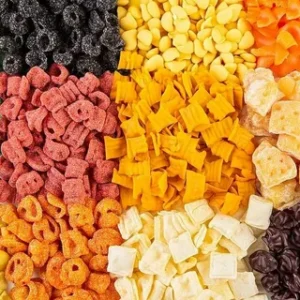
The problem is that the research on ultra-processed foods, a category that includes packaged snacks, instant noodles, fast food, sugary cereals, reconstituted meat products, flavored yogurts, and mass-produced bread, does not suggest a gentle, linear dose-response relationship. It suggests that these foods carry real biological harm at the population levels most people are actually consuming them.
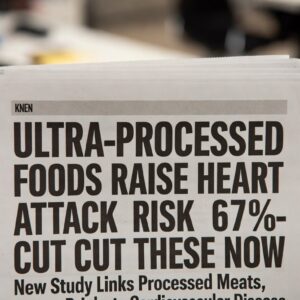
A 2024 review of 45 meta-analyses, covering nearly 10 million study participants, found convincing evidence that a diet high in ultra-processed foods increases the risk of death from cardiovascular disease by 50% and the risk of anxiety by 48%.
Those are not minor risk elevations. And it goes further.

The same review found highly suggestive evidence that greater consumption of these foods increases the risk of death from heart disease by 66%, the risk of obesity by 55%, sleep disorders by 41%, type 2 diabetes by 40%, early death from any cause by 21%, and depression by 20%.
A separate dose-response analysis published in 2025, covering over 1.1 million participants, found that each 10% increase in ultra-processed food consumption was associated with a 10% higher risk of dying from any cause.
Ultra-processed foods are not just nutrient-poor. They appear to cause active harm through multiple mechanisms: they disrupt gut microbiota, promote chronic low-grade inflammation, alter hunger hormones, and trigger reward-related brain activity in ways that make you eat more than you need.
Ultra-processed meats have been classified by the World Health Organization as a Group 1 carcinogen, a categorization shared with tobacco and asbestos, for their link to colorectal cancer.
That last fact deserves to sit for a moment. The same cancer risk classification. The same tier as cigarettes.
“In moderation” is a reasonable rule for things like red wine, birthday cake, or a greasy burger on a Saturday. It is not a blanket permission slip for a diet built substantially on packaged and processed food products.
To understand why ultra-processed foods cause harm, it helps to understand what they actually are. The NOVA classification system, developed by Brazilian researchers and now widely used in nutritional epidemiology, defines ultra-processed foods as industrial formulations made from substances derived from foods, combined with additives designed to make the product convenient, hyper-palatable, shelf-stable, and profitable. The result is something that no longer resembles food in any traditional sense. It is a product engineered to mimic food.
These products frequently contain combinations of ingredients and additives uncommon in whole foods, including emulsifiers, artificial flavors, stabilizers, colorants, and sweeteners, that may influence reward-related brain activity in ways that promote overeating. In other words, they are not just nutritionally poor. They may actively disrupt the biological systems that tell you when you have had enough.
Ultra-processed meats have been classified by the World Health Organization as a Group 1 carcinogen, a categorization shared with tobacco and asbestos, for their link to colorectal cancer. A study published in JAMA Oncology found that women who ate a lot of ultra-processed foods were 1.5 times more likely to develop pre-cancerous polyps before the age of 50.
That last fact deserves to sit for a moment. The same cancer risk classification. The same tier as cigarettes.
“In moderation” is a reasonable rule for things like red wine, birthday cake, or a greasy burger on a Saturday. It is not a blanket permission slip for a diet built substantially on packaged and processed food products. The “moderation” framing only works if your baseline is whole foods and your ultra-processed intake genuinely is occasional. For most people living in modern food environments, the ultra-processed food is the baseline.
Practical steps:
- Read ingredient labels. If the list contains more than five or six items, or if it reads like a chemistry textbook, put it back.
- Cook from scratch more often, even if “from scratch” means simple: eggs, canned beans, frozen vegetables, whole grains, olive oil.
- Swap one ultra-processed item per day for a whole-food alternative and build from there.
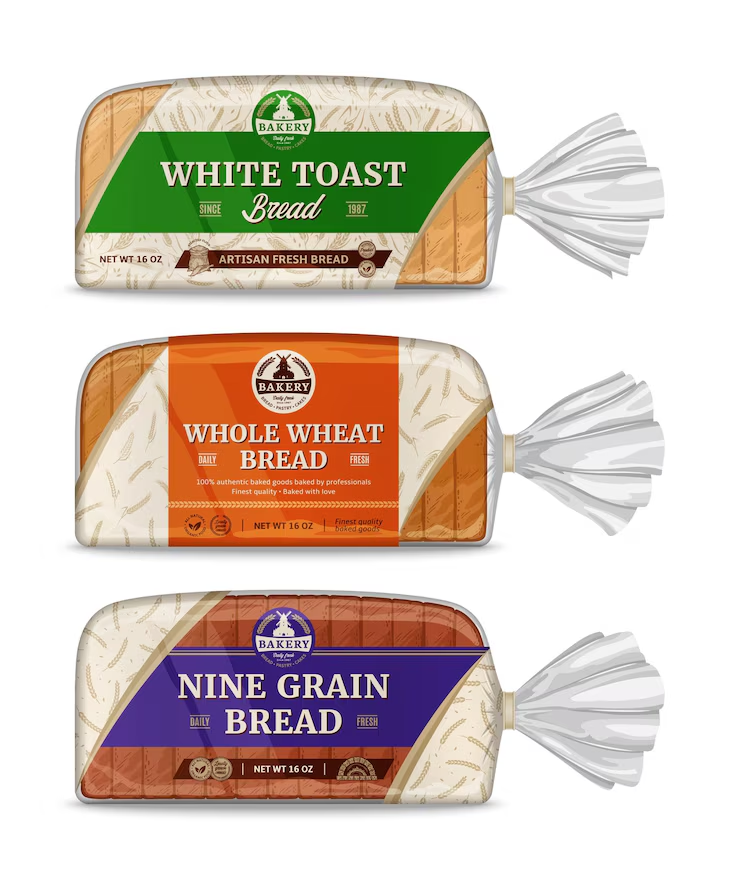
- Do not confuse “processed” with “ultra-processed.” Canned tomatoes, frozen spinach, plain yogurt, and bagged whole-grain bread are processed. A breakfast pastry with a two-year shelf life is ultra-processed. The distinction matters enormously.
Nutrition Lie #5: You Can Exercise Your Way Out of a Bad Diet
The gym industry loves this myth. The supplement industry loves this myth. The fast food industry has even funded research that subtly promotes this myth. The idea that physical activity can offset poor nutrition is deeply embedded in popular culture, and it is largely wrong.
A recent study found that humans burn roughly the same number of calories per day regardless of activity level. Exercise improves health, but it does not provide the calorie “bonus” most people expect.
This finding is counterintuitive. Surely running five miles burns more calories than sitting on the sofa? In the short term, yes. But the human body is remarkably adaptive. It compensates for increased physical activity by reducing energy expenditure in other areas, including metabolic rate, unconscious movement, and cellular processes. The net result is that total daily energy expenditure is more constrained than most people assume.
More importantly, exercise and diet affect the body through entirely different mechanisms. Exercise improves cardiovascular function, muscle mass, insulin sensitivity, mood, bone density, and cognitive health. Diet affects inflammation, gut microbiota composition, cancer risk, metabolic function, and cellular aging. These are overlapping but distinct systems. Optimizing one does not substitute for neglecting the other.
This matters practically. If you have been rewarding yourself for a 45-minute workout by eating a 600-calorie dessert, the math is not working in your favor. And if you believe that daily exercise grants you immunity from dietary harm, you may be ignoring warning signs your body is sending.
Think of it this way. Exercise is the foundation of a healthy life. Nutrition is the other foundation. Trying to stand on one while ignoring the other is how you fall.
The positive version of this message is equally important. You do not need to choose between exercise and good diet, as if they are competing demands. They reinforce each other. People who eat well tend to have more energy for exercise. People who exercise regularly tend to make better food choices. The habits support one another. Building one often naturally supports the other.
There is plenty of good news buried in this myth correction, too. You do not need to run marathons. Research suggests that nearly a quarter of new cancer cases could be prevented with better nutrition. That is a staggering figure, and it does not require you to become an athlete. It requires you to eat better food more consistently over time. Regular movement, even walking, amplifies those benefits. But the diet is doing heavy lifting on its own.
Nutrition Lie #6: Fad Diets Work If You Just Commit to Them
Keto. Carnivore. Raw food. Intermittent fasting. Juice cleansing. Every year brings a new dietary messiah promising to fix everything: your weight, your energy, your clarity, your lifespan. Every year, millions of people commit hard, feel hopeful, see some initial results, and then slowly drift back to their old habits, wondering what is wrong with them.
Nothing is wrong with them. The diets are the problem.
Open any fitness app. Scroll any health influencer’s feed. The message is everywhere: eat more protein. Add protein powder. Track your macros. Hit your protein goal or your muscles will melt off your bones.
Most popular diets, from keto to intermittent fasting to the carnivore diet, do not provide long-term results and often require excessive effort and mental energy.
The mechanism is usually simple. Restrictive diets work in the short term because they eliminate entire food categories, which tends to reduce overall calorie intake. A person on a strict keto diet is not eating chips, cake, or pasta. A person on a juice cleanse is not eating fast food. The weight loss is real. But the restriction is unsustainable for most people, and when the diet ends, the weight returns. Often with interest.
The research on low-carbohydrate diets is instructive here. A 2024 meta-analysis confirmed that when protein and calories are equated, low-carb diets result in statistically similar fat loss to high-carb diets. In other words, it is not the carbs. It is the calories. And it is the quality of the food.
What about intermittent fasting? The evidence here is more nuanced. Some people find it helpful for reducing overall calorie intake because it creates a structured window for eating. But there is no metabolic magic happening. It works, when it works, because it reduces how much people eat, not because of something special about the fasting period itself. And for many people, especially those with a history of disordered eating, extended fasting periods can be harmful.
The carnivore diet takes things further, eliminating virtually every plant food and relying entirely on animal products. There are currently no long-term randomized controlled trials on this diet. The short-term data is mixed. The long-term risks of a diet high in red meat and devoid of fiber, phytonutrients, and a diverse range of plant compounds are not small. Most nutrition scientists and oncologists view it with significant concern.
Dr. Emanuel’s message, after decades of treating patients and studying health outcomes, is deliberately unglamorous: the answer to a longer, healthier life is building sustainable habits you can maintain for years, not weeks.
Those habits look like this:
- Eating mostly whole foods in their natural or minimally processed form.
- Consuming plenty of vegetables, fruits, legumes, whole grains, nuts, and fish.
- Keeping ultra-processed foods as the exception, not the daily baseline.
- Enjoying meals socially and without guilt when the occasion calls for it.
- Skipping the detox. Keeping the olive oil. Yes, sometimes eating ice cream.
No supplement required. No 30-day challenge necessary. Just a consistent, enjoyable, whole-food-centered way of eating that you can imagine doing for the rest of your life.
The Hidden Danger Nobody Talks About: Nutrition Misinformation Itself
Beyond these six specific myths lies a broader problem. The nutrition information environment is polluted.
Social media is awash in misinformation, but the most dangerous types of posts are those that suggest replacing well-established, scientifically determined treatments with magic pills, including taking a supplement in place of chemotherapy.
Harvard oncologist Timothy Rebbeck, who runs the CancerFactFinder website dedicated to debunking false claims, has noted that this kind of misinformation is not just annoying. It is dangerous. People delay or abandon evidence-based treatment because they have been convinced that a juice or a vegetable or a supplement will do the same job.
The same logic applies to everyday nutrition. Misinformation costs people real health. When you believe fat is the enemy, you replace it with sugar. When you believe you need more protein, you buy powders that may contain heavy metals. When you believe fad diets work, you spend years in a cycle of restriction and rebound that damages your relationship with food and never produces lasting results.
Being a more skeptical consumer of nutrition information is itself a health intervention.
What This Looks Like in Real Foods: Honest Comparisons
Numbers help. Here is a look at how the nutrition myths above play out in actual food choices, using commonly referenced nutritional data.
| Food Choice | Calories | Protein | Sugar | Sodium | Processing Level |
|---|---|---|---|---|---|
| Handful of almonds (28g) | 160 | 6g | 1g | 0mg | Whole food |
| “Protein” granola bar | 190 | 8g | 12g | 140mg | Ultra-processed |
| Whole egg (large) | 70 | 6g | 0g | 70mg | Whole food |
| Egg white product (liquid, 1/4 cup) | 30 | 6g | 0g | 115mg | Processed |
| Extra-virgin olive oil (1 tbsp) | 120 | 0g | 0g | 0mg | Minimally processed |
| Low-fat salad dressing (2 tbsp) | 45 | 0g | 5g | 280mg | Ultra-processed |
| Full-fat Greek yogurt (170g) | 130 | 17g | 4g | 65mg | Minimally processed |
| Flavored low-fat yogurt (170g) | 140 | 7g | 19g | 80mg | Ultra-processed |
| Grilled salmon (85g) | 175 | 25g | 0g | 50mg | Whole food |
| Breaded frozen fish fillet (85g) | 165 | 9g | 2g | 390mg | Ultra-processed |
| Lentils, cooked (1/2 cup) | 115 | 9g | 2g | 2mg | Whole food |
| Canned pork and beans (1/2 cup) | 130 | 6g | 9g | 390mg | Ultra-processed |
The pattern is consistent. Ultra-processed alternatives tend to have more sugar, vastly more sodium, fewer nutrients per calorie, and a much longer and more synthetic ingredient list. They are also often marketed as healthier than the whole-food version.
Step-by-Step Guide: How to Break Free from Nutrition Lies
You do not need a personal nutritionist or a drastic lifestyle overhaul. You need a methodical approach to identifying what is working against you and replacing it with something better.
Step 1: Audit your current diet honestly. Write down everything you eat for three days, including snacks and drinks. Do not change anything yet. Just observe. You cannot fix what you cannot see.
Step 2: Identify your ultra-processed intake. Go through your food log and highlight anything that came from a package with more than five ingredients, or that contains ingredients you could not find in a home kitchen. That is your baseline ultra-processed food consumption.
Step 3: Pick one swap per week. Do not overhaul everything at once. Replace one ultra-processed item with a whole-food equivalent. Flavored yogurt becomes plain Greek yogurt with berries. A granola bar becomes a handful of nuts. Bottled salad dressing becomes olive oil, lemon, and salt. One swap per week is 52 improvements per year.
Step 4: Build protein from whole food sources. Calculate your approximate protein needs using the guideline of 0.75 to 1.0 grams per kilogram of body weight. Then plan how to get that protein from eggs, fish, legumes, yogurt, and modest portions of lean meat. No powders needed for most people.
Step 5: Stop fearing fat. Start fearing its replacement. Add olive oil to cooking and salads. Eat avocados. Snack on nuts. Eat full-fat dairy in reasonable portions. If a product says “low fat,” read the full nutrition label before buying it. What was the fat replaced with?
Step 6: Make snacking intentional. If you snack, decide in advance what you will eat. Keep whole-food snacks visible and accessible: a bowl of fruit on the counter, nuts in a small container, cut vegetables in the fridge. Remove ultra-processed snacks from easy reach. Environment shapes behavior more than willpower does.
Step 7: Stop chasing fad diets and start building habits. Ask yourself: can I eat this way in five years? At a restaurant with friends? At a family gathering? On a work trip? If the answer is no, the diet will not last. Build a way of eating that fits your real life.
Step 8: Become a critical consumer of nutrition information. Before accepting any nutrition claim, ask: what is the source? Is this a peer-reviewed study, or a company-funded white paper? Is this a registered dietitian, or someone with a large following and a supplement line? Healthy skepticism is a nutritional habit.
Step 9: Move your body, but not as a punishment or a calorie equation. Exercise for the health benefits it delivers on its own terms: mood, strength, cardiovascular resilience, insulin sensitivity, and longevity. Not as penance for what you ate. The two work together, but neither replaces the other.
Why These Myths Persist (and Who Benefits)
It would be naive to discuss nutrition misinformation without acknowledging the financial ecosystem that sustains it.
The global dietary supplement industry is now valued at over $150 billion annually. The protein powder market alone exceeded $25 billion in 2024. The diet and weight loss industry generates hundreds of billions more. These are not industries with a financial incentive to tell people that they are probably already getting enough protein, that fat is not their enemy, and that most fad diets do not produce lasting results.
Meanwhile, the ultra-processed food industry employs food scientists whose explicit job is to make their products as palatable, habit-forming, and irresistible as possible. The resulting products are engineered to bypass the satiety signals your body normally uses to stop eating. They are not accidents. They are designs.
Research from Harvard T.H. Chan School of Public Health has repeatedly reinforced that better dietary patterns are among the most powerful tools available for cancer prevention, yet most public health messaging still underestimates how urgently this message needs to reach people.
Understanding that your beliefs about food have been shaped, at least in part, by industries that profit from those beliefs is not a reason to despair. It is a reason to get better information and use it.
The Simplest Version of All This
Dr. Emanuel, after decades of treating cancer patients and studying what actually extends human health and lifespan, lands on an answer that is almost frustratingly simple.
Eat mostly whole foods. Get your protein from real food, not powders. Stop fearing fat and start fearing what replaced it. Snack on things that grow. Do not trust any diet you cannot sustain for five years. And yes, sometimes eat ice cream.
The most powerful nutrition strategy is not the most complicated one. It is the one you can actually maintain across years and decades, across restaurants and family dinners and holidays and hard weeks at work.
Sustainable. Whole food-focused. Free of guilt and extremism.
That, according to one of the most credentialed oncologists in the world, is what the evidence actually supports.
Conclusion: You Deserved Better Information Sooner
The six nutrition lies in this article are not obscure findings locked in academic journals. They are conclusions that the scientific community has been converging on for years. And yet they continue to shape how millions of people eat, what they buy, what they fear, and what they believe they deserve to enjoy.
You were not gullible for believing them. You were operating on the information available to you, shaped by an environment designed to reinforce these beliefs. That is not a character flaw. It is a normal human response to a profoundly noisy information landscape.
What changes now is that you have better information.
The next time someone tells you to avoid all fat, load up on protein powder, or try a new 30-day cleanse, you will have something more valuable than a willingness to comply. You will have context. And context, in nutrition, is everything.
Share This and Keep the Conversation Going
This post could genuinely change how someone you care about eats. Share it with a friend who is stuck in a cycle of fad diets, a family member who is avoiding healthy fats, or a colleague who has been chugging protein shakes every morning without knowing whether they need to.
Read Next:
- Why the New 2026 U.S. Dietary Guidelines Are More Controversial Than You Think
- The Ultra-Processed Food Problem: What Your Grocery Cart Really Says About Your Health
- Olive Oil Every Day: The Simplest Longevity Habit Backed by 30 Years of Research
Drop a comment below: Which of these six nutrition lies surprised you the most? And which one have you been guilty of believing? Let us know.
Sources referenced in this article include research published by Harvard T.H. Chan School of Public Health, the British Medical Journal, Stanford Medicine, the American College of Cardiology, the American Heart Association, Johns Hopkins Bloomberg School of Public Health, and CNBC’s coverage of Dr. Ezekiel J. Emanuel’s nutrition analysis published January 2026.