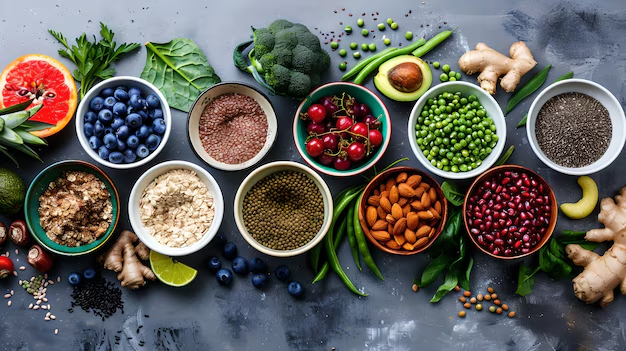
The Ingredient You Never See
What if the biggest threat to your blood sugar isn’t sugar?
What if it’s hiding in your “healthy” protein bar?
For decades, we’ve been told to avoid sugar. So we scan labels, choose “low-sugar” options, and pat ourselves on the back for making smart decisions. But here’s the uncomfortable truth: there’s an ingredient in modern food that didn’t exist in your great-grandparents’ pantry—and it can spike your blood sugar faster than table sugar.
Let’s talk about industrial refined starches.
Hidden Refined Starches: The Silent Blood Sugar Saboteur
If you want a simple rule for health, try this: Don’t eat anything that didn’t exist 100 years ago.
It sounds dramatic. It also happens to be surprisingly accurate.
Over the past century, food manufacturing transformed what we eat. Shelf life became king. Texture became engineered. Profit margins quietly outranked public health. Meanwhile, chronic diseases like type 2 diabetes, heart disease, and obesity climbed at alarming rates.
According to the Centers for Disease Control and Prevention (CDC), over 37 million Americans have diabetes, with type 2 accounting for the vast majority. That number continues to rise despite medical advancements.
So what changed?
One major shift: the introduction of industrial refined starches like:
- Maltodextrin
- Modified food starch
- Corn starch
- Dextrins
These aren’t whole foods. They’re processed derivatives—engineered carbohydrates designed for manufacturing efficiency.
And they are everywhere.

Hidden Refined Starches and Blood Sugar Spikes
You might assume that if something says “0g sugar,” it won’t spike your glucose.
Unfortunately, that’s not how metabolism works.
The Glycemic Reality
The glycemic index (GI) measures how quickly a food raises blood sugar. Pure glucose is set at 100. Table sugar (sucrose) has a GI around 65.
Now here’s the kicker:
Maltodextrin can have a GI of 85 to 110, depending on processing.
That means it can raise blood sugar faster than sugar.
Research published through Harvard Health Publishing explains how high-GI foods trigger rapid glucose spikes followed by energy crashes. Industrial starches fall squarely into that category.
Yet on nutrition labels:
- Maltodextrin is listed under “carbohydrates.”
- It does NOT appear under “sugars.”
- It often hides high on ingredient lists.
Sugar-free does not mean glucose-free.
Your pancreas doesn’t read packaging. It responds to glucose in your bloodstream—period.
Hidden Refined Starches vs Whole Food Carbohydrates
Before we demonize all carbs, let’s slow down.
There’s a massive difference between refined industrial starches and whole food starches.
Processing changes everything.
What Happens During Processing?
Industrial processing:
- Strips away fiber
- Breaks down natural cell structure
- Speeds digestion dramatically
- Removes micronutrients
The result? A carbohydrate that behaves like simple sugar.
Whole foods, on the other hand, contain:
- Intact fiber
- Natural structure
- Slower digestion
- Balanced nutrient profiles
Let’s make this crystal clear.
Comparison Table: Refined Starch vs Whole Food Carbs
| Feature | Hidden Refined Starches (Maltodextrin) | Whole Food Carbohydrates (Oats, Potatoes, Lentils) |
|---|---|---|
| Fiber Content | Nearly none | High |
| Digestion Speed | Extremely fast | Slow to moderate |
| Glycemic Impact | High spike | Gradual rise |
| Satiety | Short-lived | Sustained fullness |
| Nutrient Density | Minimal | Rich in vitamins & minerals |
| Insulin Response | Sharp surge | Controlled release |
The difference isn’t subtle. It’s metabolic night and day.
Hidden Refined Starches and Insulin Resistance
Here’s where things get serious.
A single glucose spike won’t ruin your life. But repeated spikes—day after day, year after year—create a dangerous pattern.
The Insulin Cascade
Every time blood sugar rises sharply:
- The pancreas releases insulin.
- Insulin shuttles glucose into cells.
- Blood sugar drops.
- Energy crashes.
- Hunger returns.
Repeat that cycle multiple times daily, and cells begin to resist insulin’s signal.
This is insulin resistance.
According to the National Institute of Diabetes and Digestive and Kidney Diseases, insulin resistance is a central driver of:
- Type 2 diabetes
- Fatty liver disease
- Obesity
- Metabolic syndrome
When insulin stays elevated:
- Fat burning becomes difficult
- Energy regulation falters
- Inflammation increases
It’s like trying to drain a bathtub while the faucet is still running.
Many people struggling with weight or blood sugar believe they’re “doing everything right.” They avoid sweets. They choose low-fat yogurt. They snack on protein bars.
But if those foods contain hidden refined starches, the metabolic story changes.
Hidden Refined Starches in “Healthy” Foods
Here’s the plot twist: you’ll rarely find maltodextrin in obvious junk food. It hides in foods marketed as healthy.
Common culprits include:
- Protein bars
- Meal replacement shakes
- Low-fat yogurts
- Salad dressings
- Sauces
- Protein powders
- Supplements
Why do manufacturers use them?
Simple:
- They’re cheap.
- They improve texture (“mouthfeel”).
- They extend shelf life.
- They blend easily.
From a business standpoint, they’re brilliant.
From a metabolic standpoint, they’re problematic.
Imagine grabbing a “low-sugar protein bar” after the gym. You check the label. Only 2 grams of sugar. Perfect, right?
Then you glance at the ingredients:
Maltodextrin.
It’s often listed among the first five ingredients, meaning it’s present in significant quantity.
Your bloodstream doesn’t care that it came from a fitness product instead of a candy bar.
Glucose is glucose.
Hidden Refined Starches and Energy Crashes
Let’s talk about how this feels in real life.
You eat a processed snack. Within minutes:
- Energy surges.
- Focus improves briefly.
- Mood lifts slightly.
Then:
- You feel shaky.
- Brain fog creeps in.
- Hunger returns aggressively.
- Cravings intensify.
This rollercoaster isn’t a character flaw. It’s biochemistry.
High-glycemic carbohydrates trigger sharp spikes and drops. The American Diabetes Association explains how rapid digestion contributes to unstable blood sugar patterns.
Whole food carbohydrates behave differently.
Eat a bowl of oats with nuts and seeds, and you’ll likely feel steady for hours. Add protein and healthy fats, and digestion slows further.
Context matters.
Packaging matters.
Processing matters.
Hidden Refined Starches and Label Blind Spots
Food labels create a dangerous illusion.
You see:
- Total carbohydrates
- Of which sugars
But refined starches don’t appear under “sugars.”
They hide in plain sight.
This labeling structure creates a blind spot for consumers trying to make informed decisions.
When reading ingredient lists, look for:
- Maltodextrin
- Modified starch
- Corn syrup solids
- Dextrin
- Tapioca starch
If they appear high on the list, the product likely has a high glycemic impact.
Remember: ingredients are listed in descending order by weight.
If it’s near the top, it matters.
How to Protect Yourself from Hidden Refined Starches
This isn’t about fear. It’s about awareness.
You don’t need to eliminate carbohydrates. You need to choose smarter ones.
1. Prioritize Whole Foods
Base your diet around:
- Vegetables
- Fruits
- Legumes
- Whole grains
- Nuts
- Seeds
- Quality protein sources
If it looks like it came from the earth—not a lab—you’re on the right track.
2. Pair Carbs with Protein and Fat
When you eat carbohydrates:
- Add protein
- Include healthy fats
- Keep fiber intact
For example:
- A baked potato with tuna and salad
- Oats with nuts and Greek yogurt
- Lentils with olive oil and vegetables
This combination slows digestion and blunts glucose spikes.
3. Treat Convenience Foods as Occasional
Protein bars and shakes aren’t evil. They’re tools.
But tools shouldn’t replace meals.
Use them sparingly—not as daily staples.
4. Read Ingredient Lists, Not Just Macros
Sugar-free doesn’t guarantee blood sugar stability.
Scan for hidden refined starches.
Knowledge is power.
The Bigger Picture: Environment Shapes Health
Here’s the uncomfortable truth: individual willpower isn’t enough.
Our environment drives behavior.
Food companies design products for:
- Maximum palatability
- Long shelf life
- Low production cost
Public health often becomes collateral damage.
That doesn’t mean the system is hopeless. It means we need literacy.
Once you understand how refined starches work, you can navigate the grocery store with clarity instead of confusion.
It’s like turning on a light in a dark room. Suddenly, everything makes sense.
Final Thoughts: Processing Changes Everything
Let’s bring this home.
This conversation isn’t about banning sugar. It’s not about fearing carbs.
It’s about understanding metabolism.
Whole foods digest slowly. They provide fiber, nutrients, and satiety.
Industrial refined starches digest rapidly. They spike glucose, surge insulin, and promote metabolic dysfunction over time.
Your body doesn’t care about marketing claims.
It responds to chemistry.
So next time you pick up a “healthy” snack, pause. Flip the package over. Read beyond the sugar line.
Because sometimes, the most dangerous ingredient is the one you weren’t looking for.
Read more. Share now. Take control of your metabolic health.